
CENTRIFUGAL PUMP DESIGN AND SELECTION EXCEL TOOL
$35.18
In Stock
Selecting a centrifugal pump is not just a sizing exercise — it means matching a system curve against a manufacturer’s pump curve, confirming NPSH margin, checking efficiency at the actual operating point, and sizing the driver correctly. The Centrifugal Pump Design and Selection Excel Tool from GrowMechanical builds that entire evaluation into one spreadsheet, so you can size a pump and defend the selection with calculated numbers rather than a vendor curve alone.
It is built for process engineers, mechanical engineers, utility and plant engineers, and EPC procurement teams who need to size a centrifugal pump, screen vendor offers, or verify an existing pump selection.
What This Pump Selection Tool Calculates
- Total dynamic head (static head + friction losses + pressure head)
- Required flow rate at the design duty point
- NPSH available (NPSHa) versus NPSH required (NPSHr) margin
- Hydraulic power and overall pump efficiency
- Motor power sizing with service factor
- System curve versus pump curve intersection point
Why Use This Tool Instead of Comparing Vendor Curves Manually
Confirms the Duty Point, Not Just the Curve
Vendor pump curves show what the pump can do in general; this tool calculates what your system actually needs — head, flow, and NPSH margin — so you can check any candidate pump against your real operating conditions instead of relying on catalog values alone.
Flags NPSH and Cavitation Risk Early
Insufficient NPSH margin is one of the most common causes of pump cavitation and premature failure in the field. This spreadsheet calculates NPSHa from your suction conditions and compares it directly against the pump’s NPSHr, flagging inadequate margin before the pump is ordered.
Speeds Up Vendor Comparison
Because the system-side calculations (head, flow, efficiency requirement) are already done, you can screen multiple vendor pump curves against the same calculated duty point in minutes instead of re-deriving system head for every quote received.
Key Features
- Fully editable Excel workbook — no macros or add-ins required
- Automatic total dynamic head and friction loss calculation
- NPSHa vs. NPSHr comparison with margin flag
- Efficiency and motor power sizing with safety margin
- Editable summary sheet suitable for pump datasheets and vendor RFQs
- Works offline in Microsoft Excel
Technical Specifications & Calculation Basis
| Parameter | Calculation Basis |
|---|---|
| Total dynamic head | Static head, friction loss (Darcy-Weisbach/Hazen-Williams), and pressure head summation |
| NPSH available | Suction conditions, elevation, and vapor pressure per standard centrifugal pump practice |
| Efficiency & power | Hydraulic power divided by pump efficiency, with motor service factor applied |
| Design reference | General centrifugal pump engineering practice consistent with ANSI/HI and API 610 selection principles |
| File format | Microsoft Excel (.xlsx), fully editable formulas |
Typical Applications
- Process fluid transfer pump selection
- Cooling water and utility water systems
- Firewater and booster pump sizing
- Water and wastewater treatment plant pumps
- Vendor pump curve screening and technical bid evaluation
Who Should Use This Tool
Process and mechanical engineers, plant utility engineers, EPC procurement and technical bid evaluation teams, and consultants who need to size a centrifugal pump and confirm a vendor’s proposed pump meets the actual system requirement.
What You’ll Receive
- One fully editable Excel workbook covering head, NPSH, efficiency, and motor sizing
- Instant digital download after purchase
- Lifetime access to your downloaded file
- Free updates if the calculation sheet is revised
Compatibility
Compatible with Microsoft Excel 2010 and later, and Excel for Microsoft 365, on Windows and Mac.
How to Use This Pump Selection Tool
- Enter your system data: elevation change, pipe length and diameter, fittings, and required flow rate
- Review the calculated total dynamic head and system curve
- Enter suction-side conditions to calculate NPSH available
- Compare against your candidate pump’s published NPSHr and efficiency curve
- Confirm motor power sizing and export the summary for your datasheet or RFQ
For a deeper look at pump hydraulics on the same line, see our pump hydraulic design Excel sheet and our NPSHA design Excel sheet for a focused cavitation check. If the pump feeds a mixing or reaction system, pair this with our agitator design Excel calculator, and for heat duty on the same circuit, see our heat exchanger design Excel sheet. The Engineering Design & Calculation Master Excel Bundle bundles pump, heat exchanger, and vessel sizing together, and our full library of process engineering Excel calculators covers the rest of your system.
Frequently Asked Questions
How is this different from a basic pump sizing sheet?
This tool goes beyond head and flow calculation to include NPSH margin checking and vendor curve comparison, so it supports the full selection decision, not just the initial sizing number.
What happens if NPSH margin is insufficient?
The spreadsheet flags when NPSH available is too close to NPSH required, which is the leading cause of pump cavitation. You can then adjust suction conditions, pipe routing, or pump selection before finalizing the order.
Can I compare more than one vendor’s pump against my system?
Yes. Because your system-side head and flow requirement is calculated once, you can re-check it against multiple vendor pump curves and NPSHr values to compare options quickly.
Does this apply to both horizontal and vertical centrifugal pumps?
Yes, the underlying head, flow, and NPSH calculations apply to horizontal and vertical centrifugal pump configurations; only the physical installation details differ.
How is the file delivered?
As an instant digital download immediately after purchase, so you can begin your pump selection the same day.
Get Your Centrifugal Pump Selection Tool Today
Stop comparing vendor pump curves against assumptions. Download the Centrifugal Pump Design and Selection Excel Tool and confirm your pump selection against calculated head, flow, and NPSH margin in minutes.
Related products
-
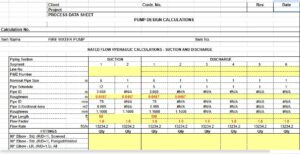
CENTRIFUGAL PUMP DESIGN EXCEL SHEET
$35.18 Rupees Add to cart Add to cart Quick View -
 Sale!
Sale!
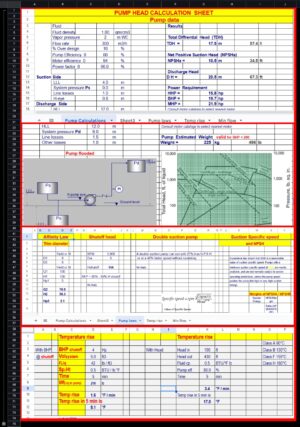
PUMP DESIGN EXCEL SHEET
$35.18Original price was: $35.18.$23.45Current price is: $23.45. Sale! Add to cart Add to cart Quick View -
 Sale!
Sale!
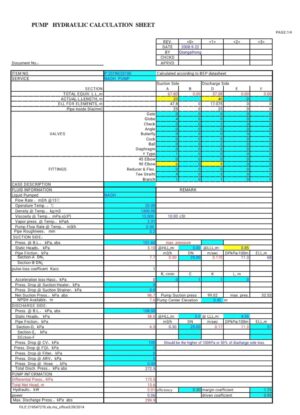
PUMP HYDRAULIC DESIGN EXCEL SHEET – EDITABLE & PROFESSION
$35.18Original price was: $35.18.$23.45Current price is: $23.45. Rupees Sale! Add to cart Add to cart Quick View -
 Sale!
Sale!
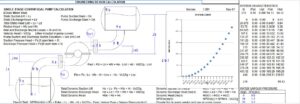
SINGLE STAGE CENTRIFUGAL PUMP DESIGN EXCEL SHEET
$35.18Original price was: $35.18.$23.45Current price is: $23.45. Sale! Add to cart Add to cart Quick View

